Gel nail polish has become one of the most widely used nail products in both professional salons and at-home routines. At a glance, it may look similar to traditional nail polish, but in reality, gel nail polish works in a completely different way—from how it cures, to how it wears, to how it is removed.
Many people ask simple questions like:
At the same time, modern users are more aware of product formulation. Keywords like HEMA-free and TPO-free are no longer niche—they are part of everyday conversations among nail professionals and informed consumers. Understanding how gel nail polish works also means understanding how formulation choices affect performance, safety, and long-term nail health.
This article explains what gel nail polish is, how it works, how it differs from regular polish, and how it fits into a complete gel nail system built around soak-off performance and modern safety standards.
Gel nail polish is a type of nail coating made from gel-based polymers that harden (or “cure”) when exposed to UV or LED light. Unlike traditional nail polish, which dries through evaporation, gel polish undergoes a chemical curing process that transforms it from a liquid into a solid, durable layer.
Because of this curing process, gel nail polish:
Gel nail polish is designed to be used within a gel system, meaning it relies on base coat and top coat layers to perform correctly.
The biggest difference between gel nail polish and regular polish is how it sets.
When gel polish is placed under a UV or LED lamp, photoinitiators in the formula react to the light, triggering the gel molecules to link together and harden.
This process creates a strong, flexible coating that adheres to the nail without becoming brittle.
Photoinitiators are essential in gel nail polish because they control how the gel reacts to light. In recent years, there has been growing interest in TPO-free gel polish, as TPO (a specific photoinitiator) has come under increased scrutiny in certain regions.
Modern TPO-free gel nail polish uses alternative photoinitiators that still allow effective curing while aligning with updated professional standards.
Although both products add color and finish, they behave very differently.
Gel nail polish typically lasts 2–3 weeks without chipping, while regular polish may begin to chip within days. This durability comes from the cured gel structure and its interaction with the base coat and top coat.
Gel nail polish requires:
Regular polish does not require a lamp and usually skips the base-and-top system used in gel applications.
Regular polish is removed with simple remover.
Gel nail polish—especially in soak-off gel systems—requires soaking in remover to break down the cured gel layers.
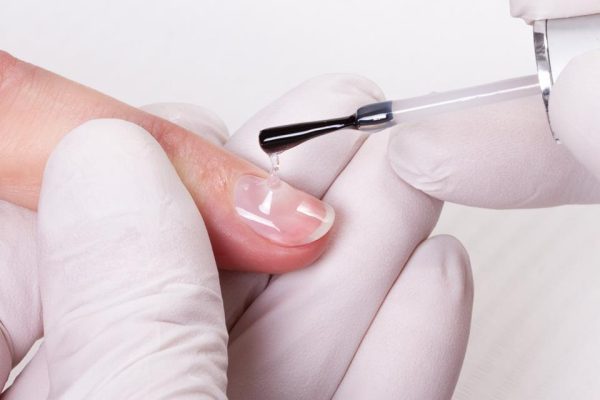
Gel nail polish should never be applied directly to the natural nail. The base coat is essential for:
Without a base coat, gel polish is more likely to lift, peel, or cause surface damage during removal.
In modern gel systems, base coats are often formulated as HEMA-free and TPO-free, especially because they sit closest to the natural nail and skin.
Gel nail polish does not reach its full performance potential without a top coat. The top coat:
A compatible gel top coat ensures that the gel polish remains intact throughout daily activities.
As with other layers, many professionals now choose HEMA-free and TPO-free top coats to maintain consistency across the system.
Soak-off gel nail polish is designed to soften and release when exposed to remover, allowing the gel to be gently removed without aggressive filing.
This is achieved through careful formulation across all layers—base coat, gel polish, and top coat.
Soak-off systems are now considered the standard in professional environments, especially when combined with safer formulations like HEMA-free and TPO-free gels.
HEMA is a common ingredient in many gel products, but it has also been associated with skin sensitivity in some individuals. As a result, HEMA-free gel nail polish has become increasingly popular.
Benefits of HEMA-free gel polish include:
While HEMA-free does not mean “risk-free,” it represents a thoughtful approach to formulation in professional gel systems.
TPO-free gel nail polish reflects changes in how gel products are formulated to meet evolving expectations. By using alternative photoinitiators, TPO-free gels aim to maintain curing efficiency while adapting to updated safety considerations.
For professionals, choosing TPO-free options can help future-proof their services and maintain consistency across their gel systems.
Gel nail polish does not work in isolation. Its performance depends on:
When used as part of a complete gel system, gel polish delivers balanced flexibility, durability, and shine.
This system-based approach is especially important when working with soak-off, HEMA-free, and TPO-free formulations, as consistency across layers improves results.
In reality, gel polish is more flexible, which helps prevent cracking.
Formulation, curing behavior, and system compatibility vary widely.
Soak-off gel polish can still provide professional-level wear when properly formulated.
While gel nail polish is available for at-home use, professional systems are typically:
Professionals also tend to prioritize HEMA-free and TPO-free formulations to reduce long-term exposure risks.
Gel nail polish is more than long-lasting color. It is a carefully engineered product that relies on curing chemistry, system compatibility, and formulation choices to deliver its results.
By understanding how gel nail polish works—and how it fits into a complete gel nail system—users can make better decisions about application, removal, and product selection. Modern trends toward soak-off systems, HEMA-free gels, and TPO-free formulations reflect a broader shift toward balance: performance without unnecessary compromise.
Subscribe now to keep reading and get access to the full archive.