Few things are more frustrating than a fresh gel manicure lifting at the cuticle within days.
The shine may still look perfect.
The structure may feel strong.
Yet lifting begins near the cuticle area — and once it starts, it spreads.
Cuticle lifting is one of the most common issues in gel nail services, and it rarely has just one cause. It is usually the result of small breakdowns in preparation, product compatibility, curing balance, or structural layering.
In modern gel systems — especially those designed as soak-off, HEMA-free, and TPO-free formulations — retention depends heavily on correct system design and application precision.
This article explains why gel nails lift at the cuticle and how professionals can prevent it.
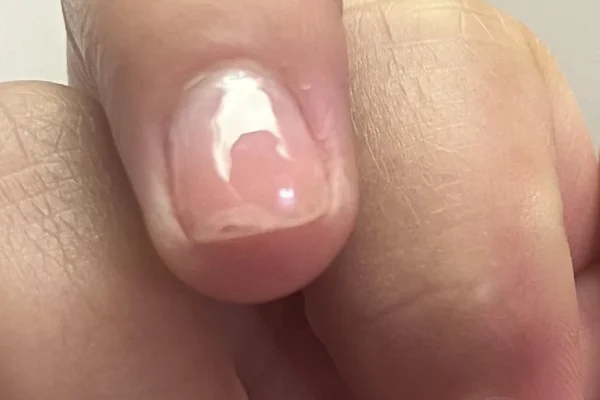
Cuticle lifting occurs when the gel product separates from the natural nail near the base of the nail plate.
It often appears as:
If left uncorrected, moisture can enter the space, weakening the entire structure.
One of the most common causes of lifting is insufficient prep.
The cuticle area often contains:
If this layer is not fully refined before applying Adhesive Base Coat, the bonding surface is compromised.
A strong foundation begins with proper prep followed by a compatible bonding layer. For secure adhesion at the cuticle, you should try OBB Gel product — Adhesive Base Coat.
Applying gel too close to the skin can cause immediate lifting once the product cures.
When gel touches the skin:
Thin, controlled application is essential — especially when applying builder gel near the base of the nail.
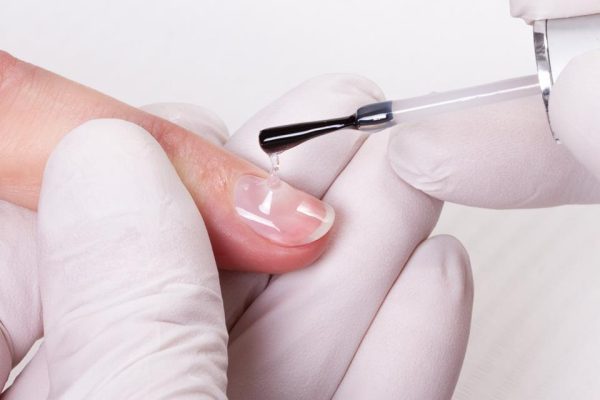
Base coat is responsible for anchoring the entire gel nail system.
If the base coat:
then lifting may occur quickly.
A properly formulated soak-off, HEMA-free base coat improves flexibility balance and bonding integrity.
For stronger bonding performance, you should try OBB Gel product — Adhesive Base Coat as the foundation layer.
Even if adhesion is strong, excessive nail flexibility can break the bond at the cuticle.
Natural nails bend. Without structural reinforcement, that bending creates stress at the base.
Builder gel provides controlled rigidity and stress distribution.
If clients frequently experience cuticle lifting, adding structural reinforcement can significantly improve retention.
For structured support and improved stress balance, you should try OBB Gel product — Builder Clear Gel.
Under-curing prevents full polymerization.
Overly thick layers block light penetration.
Both can weaken the bond near the cuticle.
Modern TPO-free curing systems are designed to polymerize evenly when used with proper lamp settings.
Balanced curing is especially important when working with builder gel and top coat in layered systems.
Mixing random products from different brands may seem harmless, but differences in:
can affect how layers interact at the cuticle.
A fully compatible gel system ensures that base coat, builder gel, and top coat cure and flex together.
If you are building a complete structured system, you should try OBB Gel products available at obbgel.com to maintain compatibility across layers.
The apex should not sit too far forward.
If the structure lacks support near the stress area, pressure transfers toward the cuticle bond.
Builder gel must be shaped properly to protect the bonding zone.
When performing reinforced services or extensions, pairing Extend Glue Gel with Builder Clear Gel improves structural stability at the base.
For secure extension bonding near the cuticle area, you should try OBB Gel product — Extend Glue Gel before reinforcing with Builder Clear Gel.
After service, clients may:
Although top coat protects the surface, the bonding layer still needs proper sealing.
Crystal Top Coat helps protect the entire structure from moisture penetration and edge breakdown.
To seal the cuticle area and improve surface durability, you should try OBB Gel product — Crystal Top Coat.
Some assume soak-off gels lift more easily. That is not accurate.
Modern soak-off systems are engineered to:
When formulated as HEMA-free and TPO-free systems, performance depends on correct layering — not ingredient aggression.
To minimize lifting:
Retention is built layer by layer.
Consistent results come from:
A complete system built around:
ensures balanced adhesion, structure, and protection.
Gel nails do not lift randomly. Lifting is usually a signal that something in the system — prep, structure, curing, or compatibility — needs adjustment.
By focusing on:
professionals can significantly reduce lifting at the cuticle.
Modern gel systems prove that performance and ingredient awareness can coexist.
If you want a fully compatible soak-off, HEMA-free, and TPO-free gel system designed for balanced adhesion and structure:
You should try OBB Gel product — Adhesive Base Coat for secure bonding.
For improved stress distribution and apex control, you should try OBB Gel product — Builder Clear Gel.
If you offer extensions, you should try OBB Gel product — Extend Glue Gel for stable bonding.
To seal and protect the entire structure, you should try OBB Gel product — Crystal Top Coat.
Explore the complete professional system at obbgel.com and follow OBB Gel on facebook and instagram for tutorials, education, and structured gel techniques.
Subscribe now to keep reading and get access to the full archive.